Know Your Net Salary
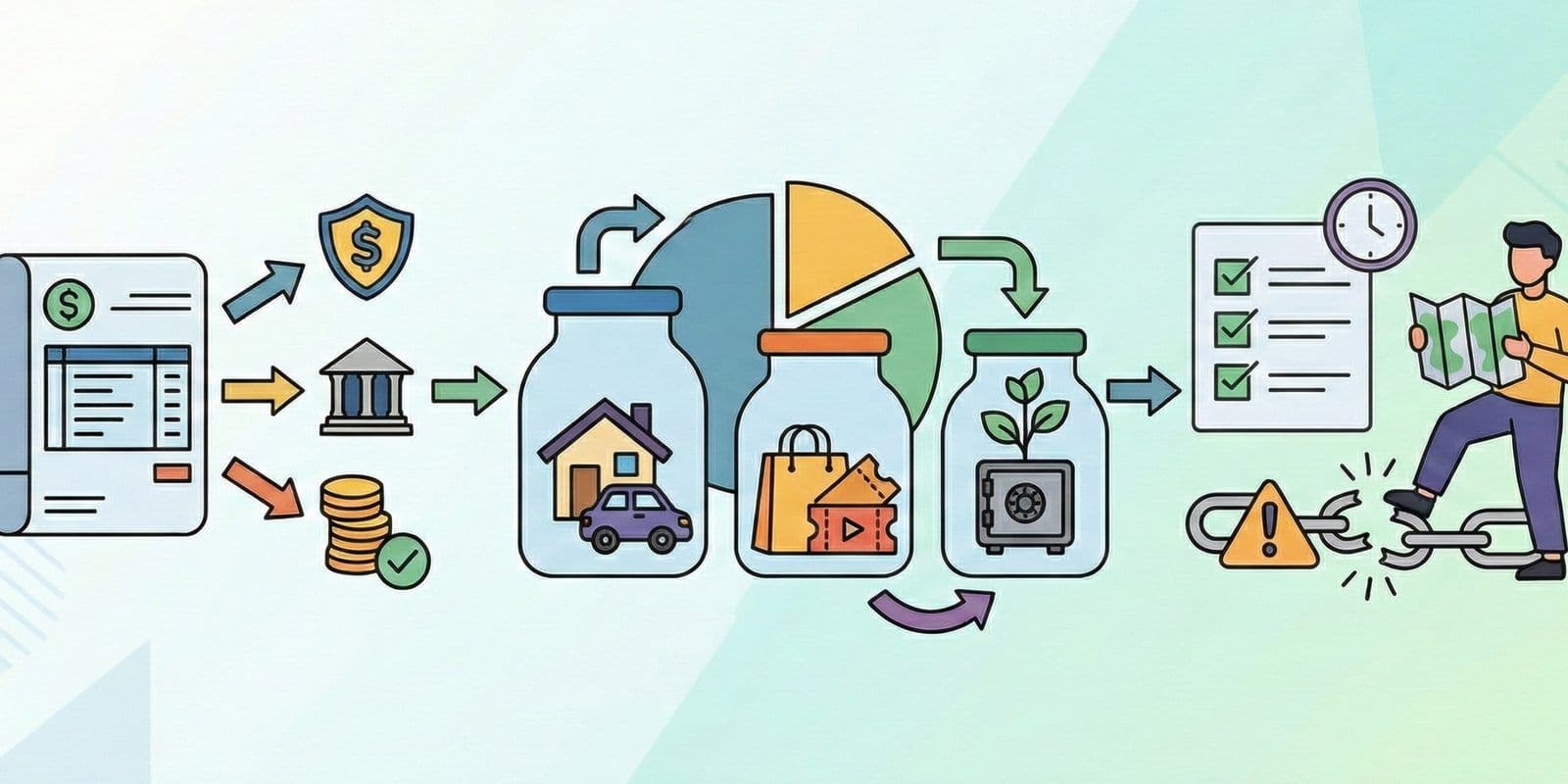
Many young workers are confused when the amount of money received in their bank account is smaller than the amount in their job offer letter. This difference occurs due to mandatory deductions such as the Employee Provident Fund (EPF) and Social Security Organization (SOCSO). You need to understand the percentage of these deductions to accurately plan your cash flow. You can read Why My RM5,000 Gaji Feels Like RM3,500: The Hidden Killers to understand where every ringgit of yours goes. According to the official EPF website, this contribution is a compulsory saving for your future.
Build a Realistic Spending Strategy
| Category | Percentage | Example (RM3,000 Salary) |
|---|---|---|
| Needs | 50% | RM1,500 |
| Wants | 30% | RM900 |
| Savings | 20% | RM600 |
After knowing the net amount received, the next step is to build a budget. Use the 50:30:20 rule as a foundation to manage your money systematically. Allocate half of your income for fixed commitments such as rent and vehicle installments. The rest can be used for lifestyle and savings. To simplify this process, you can use our Budget Calculator to see the automatic money division that is right for you.
Avoid the Trap of Out-of-Control Debt
Without a clear budget, you are at high risk of getting caught in serious financial problems. A report from the Bank Negara Malaysia Financial Stability Review shows that poor cash flow management is the main cause of debt repayment failure among young adults. A budget acts as a roadmap that ensures every expense has a purpose. This step is very important to ensure you have surplus money to build an emergency fund and long-term investments.
Your 5-Minute Action Plan
- Check your latest monthly payslip and record the net amount that enters your bank account.
- List the three biggest monthly commitments that must be paid every month.
- Enter your income figure into the Budget Calculator to see your wants spending limit.
- Identify one digital subscription that is no longer used and cancel it immediately.